
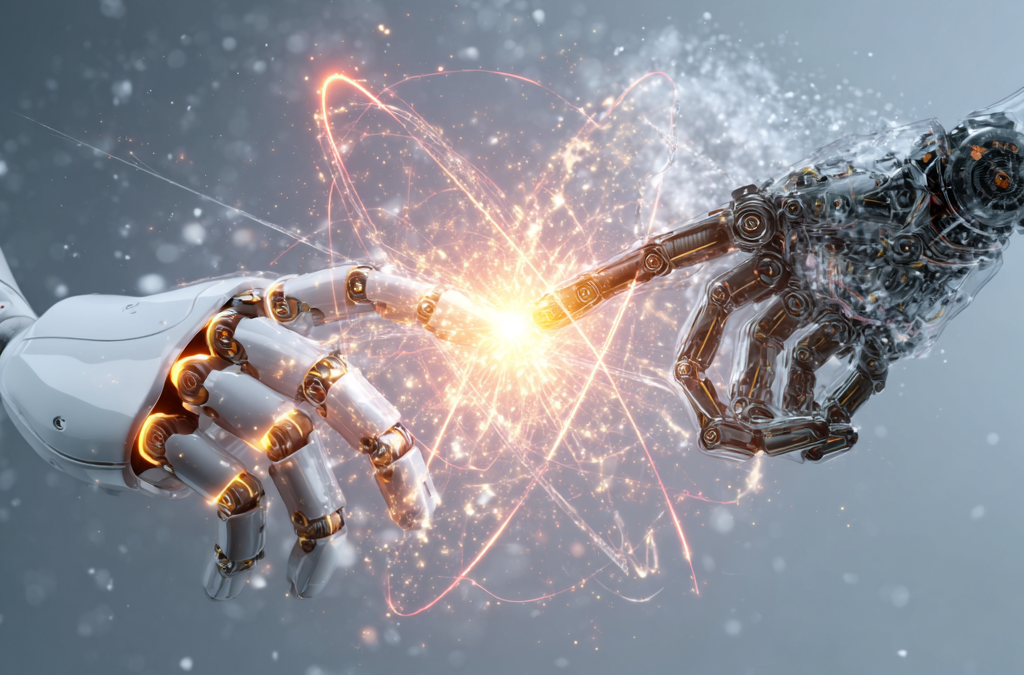
The Intersection of AI and Blockchain: How Machine Learning is Shaping the Crypto World
As the world hurtles into a future dominated by decentralized systems and intelligent machines, two technologies stand out for their revolutionary potential: Artificial Intelligence (AI) and Blockchain. While each has already disrupted industries on its own, their convergence is now birthing a new generation of innovation—combining the transparency and trust of blockchain with the adaptive intelligence of AI.
Why AI and Blockchain Make the Perfect Match
On the surface, AI and blockchain seem like opposites: AI thrives on learning from vast datasets and making probabilistic decisions, while blockchain is all about immutable records and deterministic logic. But when integrated correctly, they form a powerful synergy.
Key Synergies:
-
AI Needs Trustworthy Data: AI models improve with high-quality data. Blockchain offers tamper-proof datasets that boost the reliability and auditability of AI training inputs.
-
Blockchain Needs Smart Automation: AI enables intelligent decision-making, real-time predictions, and automation within smart contracts and decentralized applications (dApps).
Can AI Trade in the Stock Market? Full Demo
1. AI-Powered Blockchain Projects: Leading the Charge
Several startups and platforms are pioneering this fusion:
-
Numerai: A hedge fund powered by a decentralized data science competition. Data scientists build AI models using encrypted data and stake tokens on their performance.
-
Ocean Protocol: Facilitates decentralized data marketplaces where AI models can access and monetize data without compromising privacy.
-
Fetch.ai: Builds autonomous economic agents that use AI to negotiate and execute blockchain-based contracts in logistics, finance, and energy.
These projects are laying the groundwork for intelligent, decentralized economies.
2. Enhancing Blockchain Security with Machine Learning
AI is rapidly becoming a vital tool for detecting threats and preventing fraud in blockchain systems.
Key Use Cases:
-
Anomaly Detection: AI models can flag unusual transactions, suggesting potential hacks or rug pulls in real time.
-
Wallet Behavior Analysis: Machine learning tracks wallet interactions to identify bots, whales, or malicious actors.
-
Smart Contract Audits: NLP models help automate code reviews by scanning for vulnerabilities in Solidity contracts.
The integration of AI in Web3 security represents a new frontier of proactive defense.
3. Smarter Smart Contracts
Smart contracts today are relatively “dumb”—they only follow if-then logic. But with AI integration, they evolve into context-aware agreements that can make decisions based on predictions, patterns, and external data.
Future of Smart Contracts:
-
AI agents that trigger contracts based on market sentiment or off-chain conditions.
-
Dynamic pricing mechanisms for NFTs or token sales based on real-time demand forecasts.
-
Negotiation bots that manage decentralized insurance claims or subscription services.
AI essentially gives blockchain contracts intuition and foresight, paving the way for autonomous commerce.
4. AI Agents on the Blockchain
Projects like Alphire (see Alphire.com) are pioneering platforms where AI agents are not only created and customized, but also tokenized. Each AI agent can have:
-
Its own coin/token economy
-
A unique brand and identity
-
Decentralized logic stored on-chain
-
Communication abilities via X (Twitter), Telegram, or Discord
This concept turns AI into a Web3-native entity capable of operating independently within blockchain ecosystems.
5. Decentralized AI Marketplaces
AI marketplaces on the blockchain offer a new way to buy, sell, and train models collaboratively without centralized control.
Examples:
-
SingularityNET (AGIX): A decentralized network where developers publish and monetize AI services.
-
Cortex: A blockchain supporting on-chain AI inference for smart contracts.
-
Gensyn: A protocol to decentralize access to GPU compute power for AI training.
These marketplaces remove barriers and democratize AI development across borders.
6. Challenges of AI-Blockchain Integration
Despite the promise, there are hurdles:
-
Latency: On-chain operations are slower than real-time AI requires.
-
Data Privacy: Balancing transparency with data confidentiality is complex.
-
Regulatory Risk: AI’s ethical issues + crypto’s legal uncertainty = tricky terrain.
But innovations like zero-knowledge proofs, off-chain computation, and tokenized governance are helping to mitigate these concerns.
7. What the Future Holds
We are moving toward a world where:
-
Autonomous AI agents operate businesses on-chain.
-
AI models are DAO-governed, open-sourced, and transparently trained.
-
Cryptographic data integrity fuels ethical and unbiased AI.
This isn’t just theoretical—it’s already happening.
Conclusion: The AI x Blockchain Convergence is a Mega-Trend
The fusion of AI and blockchain represents more than just a tech upgrade—it’s a paradigm shift. AI brings intelligence and adaptability. Blockchain brings transparency and decentralization. Together, they unlock unprecedented potential in finance, governance, healthcare, gaming, and more.
Whether you’re a builder, investor, or curious observer—understanding this intersection is essential for navigating the next decade of innovation.

Crypto Rich ($RICH) CA: GfTtq35nXTBkKLrt1o6JtrN5gxxtzCeNqQpAFG7JiBq2
CryptoRich.io is a hub for bold crypto insights, high-conviction altcoin picks, and market-defying trading strategies – built for traders who don’t just ride the wave, but create it. It’s where meme culture meets smart money.